Chinese face reading (mian xiang) is the traditional Chinese art of reading character and life themes from the face. In fact, it is more than two thousand years old and is still discussed in feng shui, Chinese astrology and traditional Chinese medicine circles. Overall, this guide explains how it works, how it differs from the Indian approach, and what each part of the face is traditionally said to show.
What is This tradition?
In mian xiang, the face suggests a map. Likewise, the reader looks at the shape, colour, lines and proportion of features and links them with temperament and life stages. For example, it is a cultural, belief-based system, not a scientific one. Also, people use it for reflection, relationship insight and curiosity, and often alongside Chinese face fortune telling and Chinese astrology.
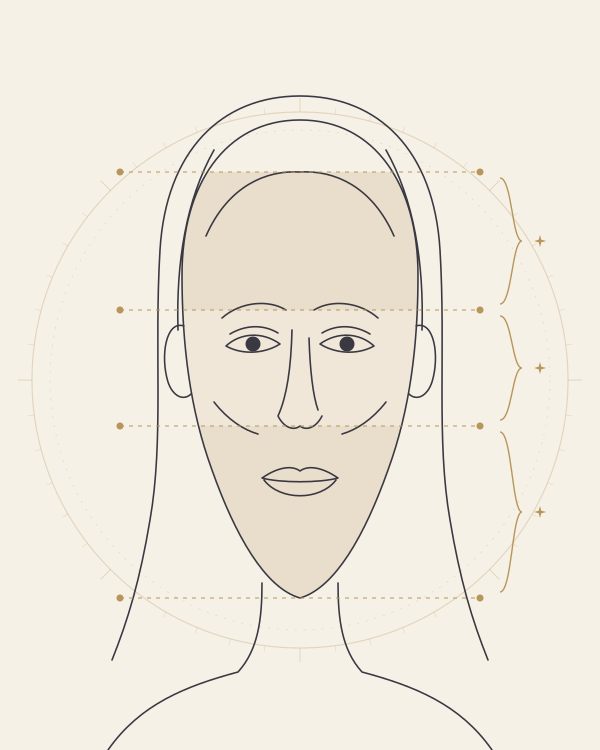
The three zones of the face
- Upper zone (forehead): early life, thinking and family background.
- Middle zone (eyebrows to nose tip): middle years, drive, work and relationships.
- Lower zone (below the nose to chin): later life, stability and determination.
In addition, a balanced face, where the three zones feel in proportion, counts as a sign of steadiness.
The five elements and face types
In fact, Chinese physiognomy links face shapes to the five elements:
- Wood: long, rectangular face. Seen as visionary and growth-minded.
- Fire: pointed chin, high cheekbones. Seen as energetic and expressive.
- Earth: square, solid face. Seen as dependable and practical.
- Metal: oval or round with defined features. Seen as organised and precise.
- Water: round, soft face. Seen as adaptable and intuitive.
See also our face shape reading guide.
This tradition by feature
Face reading of the forehead in Chinese tradition
Similarly, a smooth, wide forehead relates to a good early life and clear thinking. Likewise, see forehead face reading.
Face reading of the eyebrows in Chinese tradition
For example, eyebrows relate to friendships, will and emotional expression. Also, thick, well-shaped brows suggest strength; thin or broken brows as sensitivity. In addition, see eyebrow face reading.
Face reading of the eyes in Chinese tradition
In fact, eyes are the “palace of the spirit”. Overall, clear, steady eyes suggest inner clarity. Similarly, see eye face reading.
Face reading of the nose in Chinese tradition
Likewise, the nose represents wealth and self-worth in Chinese tradition. For example, a firm, well-proportioned nose suggests financial steadiness. Also, see nose face reading.
Lips and mouth
In addition, lips relate to communication, affection and how you express desires. In fact, see lips and mouth reading.
Chin
Overall, a strong chin suggests determination and late-life stability. Similarly, see chin face reading.
This tradition and health
Likewise, in traditional Chinese medicine, practitioners observe the face, including colour and texture, as one of several signs during diagnosis. For example, this is a traditional approach, not a diagnosis, and face reading on this site is never a substitute for a doctor. Also, see face reading for health.
Chinese vs. Indian face reading
| Chinese (mian xiang) | Indian (Samudrik Shastra) | |
|---|---|---|
| Framework | Three zones, five elements, twelve palaces | Body signs linked with Jyotish and planets |
| Often combined with | Feng shui, Chinese astrology | Birth chart (Vedic astrology) |
| Focus | Fortune, health and life stages | Character, relationships and timing |
In addition, for the Indian approach read the complete guide to face reading astrology.
For wider historical background, see physiognomy on Wikipedia.
Want a personal reading with a chart? Book a face reading consultation with Divya, or message on WhatsApp.
Frequently asked questions
What is This tradition?
In fact, chinese reading, or mian xiang, is the traditional Chinese art of reading character and life themes from the face, using zones, elements and features.
Is This tradition accurate?
It is a traditional, belief-based practice and is not scientifically validated. Use it for reflection rather than prediction.
What does the nose mean in This tradition?
Overall, traditionally the nose relates to wealth, self-worth and drive.
Can face reading diagnose health problems?
Similarly, no. Traditional Chinese medicine observes the face as one sign among many, but face reading is not a medical diagnosis.
Related guides
- Face reading astrology: the complete guide
- Free face reading online
- Chinese face reading guide
- Face reading in Hindi (फेस रीडिंग)
- All face reading guides
Face reading is a traditional, belief-based practice meant for reflection and cultural interest. It is not a scientific method and cannot predict outcomes with certainty. It is not medical, legal or financial advice.