Samudrik Shastra face features form the core of the classical Indian system of reading the body and face. First, this guide gives a simple overview of what each part traditionally shows. However, these are traditional interpretations, not guarantees.

Face features in Samudrik Shastra: the basics
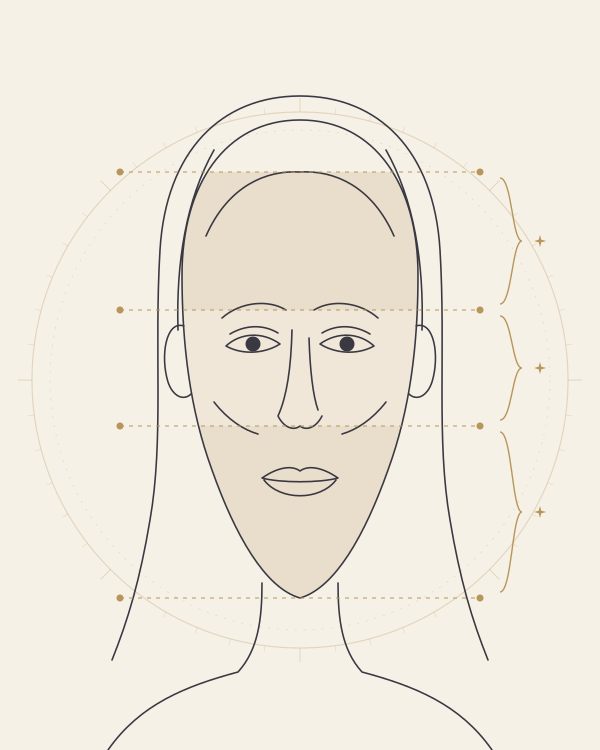
This old Indian tradition connects the body with character. Moreover, it treats the face as the most expressive part. In addition, a reader looks at shape, size, colour and balance. Therefore, no single mark decides anything. Instead, the reader studies how the parts work together.
Forehead among the Samudrik Shastra face features
Traditionally, the forehead links with thinking style, planning and early-life influences. For example, a broad, smooth forehead often suggests a reflective person. Similarly, a narrow one may suggest a practical person. You can read more in our forehead guide.
Eyebrows and eyes
Eyebrows relate to friendships and how you deal with people. Meanwhile, tradition calls the eyes a window to emotions, focus and intuition. Because the two work together, a reader studies them as a pair. See the eye guide for details.
Nose
The nose links with self-respect, drive and your attitude toward money and work. Also, a reader checks the bridge and the tip separately. Next, the nostrils show how freely a person spends. Our nose guide explains more.
Lips and chin
Lips connect with communication and affection. On the other hand, the chin connects with willpower and stability. Additionally, the way the two meet shows balance. Learn more in the chin guide.
Whole face features: how Samudrik Shastra reads them
No single feature decides anything. Instead, a reader looks at the balance of the whole face. For background on the tradition, see this overview of Samudrika Shastra. Finally, for a personal session, book a face reading consultation or browse the full set of face reading guides.
Face reading is traditional guidance for reflection and entertainment. It is not medical, legal or financial advice.